Most smart locks are deadbolts with a motor and a keypad added, so neither one is stronger by default. A mechanical deadbolt is the better pick if you want simple hardware that never needs batteries, and a smart deadbolt is better if you want codes, remote access and auto-lock.
Strength comes from the bolt, the strike plate and the frame. Whether there is a chip inside changes none of that, and a Grade 1 or Grade 2 smart deadbolt on a well prepared door holds up as well as a mechanical one of the same grade. Apex Locksmith Pros installs both around McKinney. Plenty of the homes we work on end up with a mix: a smart lock on the door everyone uses every day, solid keyed deadbolts on the rest. Below we go through strength, key control, convenience, failure modes and cost, then who should pick which.
Need it handled today? Lock Installation from a licensed mobile locksmith in McKinney and nearby cities.
In this guide (6 sections)
Is a smart lock just a deadbolt with a motor?
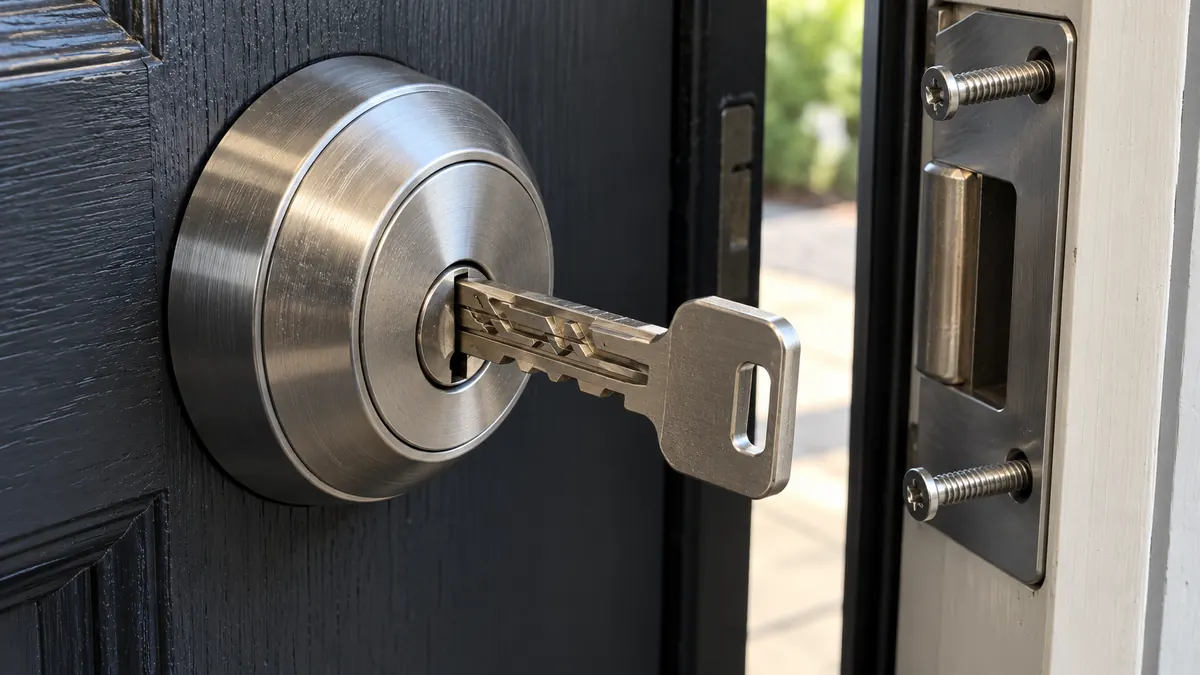
Most of the time, yes. Take a keypad smart deadbolt off a door and the parts look familiar: a bolt that slides into the frame, a strike plate on the jamb, a thumbturn on the inside. The smart part is a small motor that turns the bolt, a circuit board and batteries, plus a keypad or touchscreen outside on keypad models.
Retrofit models go a step further. August and Level make products that work with the deadbolt already on your door. The deadbolt stays put and only the way it gets turned changes.
So smart versus dumb is the wrong way to frame it. Two questions matter more. First, how strong is the deadbolt part? That means its ANSI/BHMA grade, the bolt itself, and how the strike is fastened into the framing. Second, how do you want to control access: physical keys you hand out, or codes and app access you can change from your phone? A cheap smart lock on a weak bolt loses to a good mechanical deadbolt. Put the same electronics on a graded bolt and it doesn't.
Smart lock vs deadbolt: side-by-side comparison
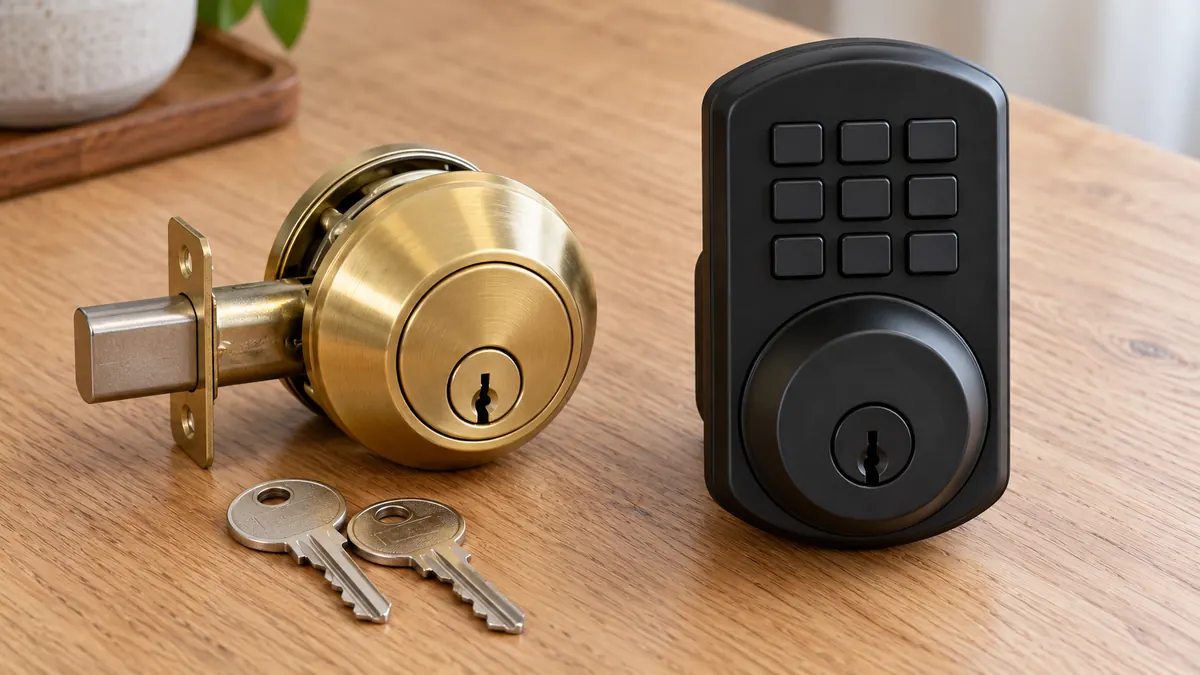
Here is a typical keypad smart deadbolt next to a quality mechanical deadbolt of the same grade, both installed on the same door.
Forced entry (kick-in): about equal. Both come down to the strike plate, screw length and frame. Picking and bumping: the mechanical deadbolt is as good as its cylinder. The smart lock is as good as its backup cylinder, and keyless models don't have one. Key control: lost keys mean a rekey on the mechanical deadbolt. On the smart lock you delete a code in the app. Convenience: the smart lock adds auto-lock, guest codes, remote unlock and an entry log. Power: the mechanical deadbolt needs none. The smart lock runs on batteries and warns you when they get low. Failure modes: a mechanical deadbolt can wear or bind over the years. A smart lock can too, and it can also lose batteries, connectivity or firmware support. Install sensitivity: a mechanical deadbolt shrugs off minor misalignment. A motor does not. Cost: smart lock installation from $169+. A mechanical deadbolt install is quoted on the call once we know the door and hardware.
No column wins every row. What decides it is which rows matter in your house.
Is a smart lock as secure as a deadbolt?
Against a kick, the most common attack on a front door, a smart deadbolt and a mechanical deadbolt of the same grade perform about the same. The bolt and the strike do the work either way. In most forced entries the lock itself holds and the jamb splits around a strike plate held on with short screws.
The differences show up at the edges. A mechanical deadbolt is only as good as its cylinder, and someone with practice can pick or bump a basic one. A smart lock with a keyed backup has the same weakness, so check what cylinder it uses. Fully keyless models have no cylinder on the outside at all. That closes the picking route, but now you depend on batteries and the emergency power contacts.
Then there is the digital side: app accounts, codes, wireless connections. Remote hacking of a mainstream lock is rare next to physical attacks. The basics still matter, though. Give the app account a strong unique password and turn on two-factor sign-in, change the default master code, and buy from a maker that still ships firmware updates. Do that and the electronics are not the weak link. The frame usually is.
Want the lock fitted and the door checked in one visit? Call for a flat price before anyone drives out.
Key control: rekeying a deadbolt vs deleting a code
This is where the two feel most different day to day. Every key you hand out for a mechanical deadbolt is a copy you can't take back. When a roommate moves out, a contractor finishes or a key goes missing, the fix is a rekey so the old keys stop working. Rekeying runs from $35+ per cylinder. It is quick, and it is permanent.
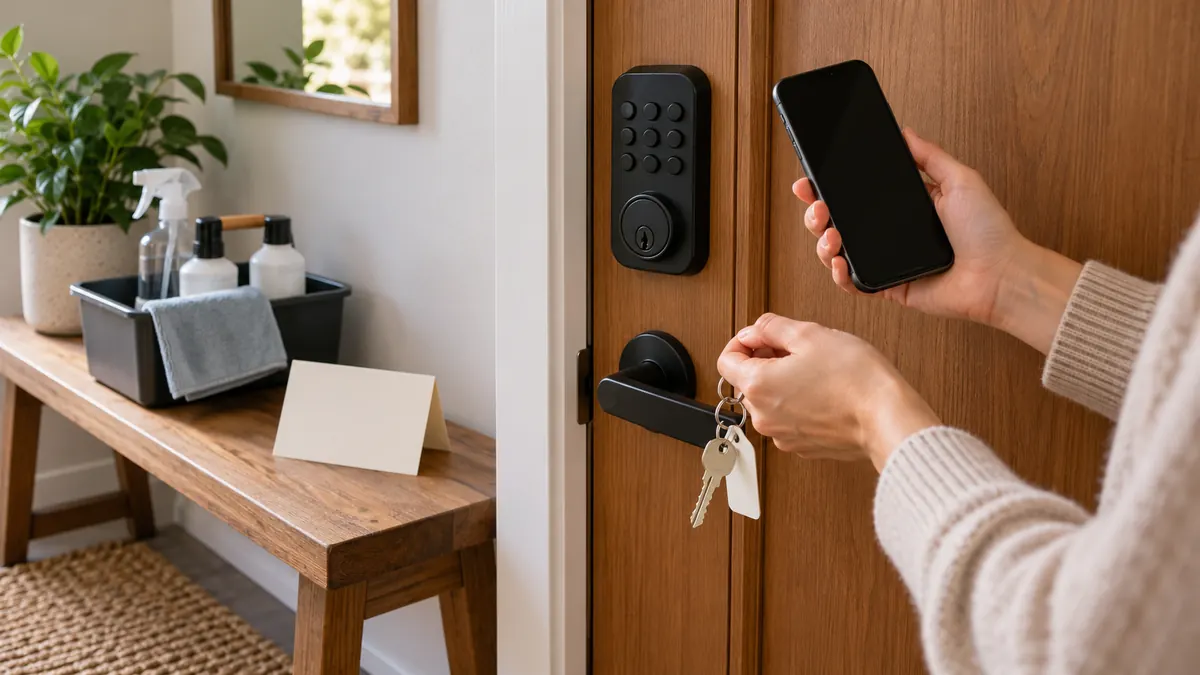
A smart lock gives each person their own code. When someone's access should end, you delete their code in the app or at the keypad and it stops working right away. Many models also let you schedule codes. The dog walker in Stonebridge Ranch gets in on weekday afternoons and no other time, and a guest code can expire the day after checkout. The entry log shows which code opened the door and when.
That is the main reason families, landlords and short-term rental hosts go smart. A household of two who rarely hand out keys gets much less out of it, and a good mechanical deadbolt, rekeyed every time you move, is simple and dependable. One catch: a smart lock with a keyed backup still has keys, and those need the same care.
Failure modes: what goes wrong with each
Mechanical deadbolts fail slowly. Cylinders wear, keys get bent or snapped, and a bolt starts to drag as the house settles. North Texas clay moves foundations with the seasons, so a deadbolt that threw easily in April can rub by August. You notice it, you adjust the strike or call for lock repair, and the lock keeps working in the meantime.
Smart locks have all of those mechanical problems plus a few of their own. Batteries die, usually after weeks of warnings. If the Wi-Fi or hub drops, you lose remote control but the keypad still works. A maker can stop updating an older model or change its app. The sneaky one is torque. A motor has far less of it than your hand, so a bolt that drags a little turns into a lock that jams and drains its batteries.
Plan for the failure you would hate most. If getting locked out by dead batteries is the one you'd never forgive, choose a smart lock with a keyed backup and change the batteries at the first warning. If you can't stand apps, a mechanical deadbolt is the honest choice, and there is nothing wrong with it.
Who should choose a smart lock, a deadbolt, or both?
A smart lock suits households that share access a lot: families with kids who lose keys, homes with a cleaner, dog walker or caregiver, landlords and short-term rental hosts, and anyone who wants auto-lock because the door keeps getting left open. A mechanical deadbolt suits secondary doors you rarely use, owners who want nothing to do with batteries or apps, and homes on a tight budget where a rekey fixes the actual problem.
For most houses we see in McKinney, Allen and Frisco, we'd go hybrid:
- Put a Grade 1 or Grade 2 smart deadbolt on the door everyone uses daily, often the front door or the door from the garage.
- Keep good keyed deadbolts on the other exterior doors, Grade 1 where you can.
- Fit a reinforced strike plate with 3-inch screws into the framing on every exterior door.
- Key the smart lock's backup cylinder and the mechanical deadbolts alike, so one key opens every door.
Apex Locksmith Pros installs both kinds of lock and can do the whole plan in one visit. Smart lock installation starts from $169+. Deadbolt installs and strike upgrades are quoted on the call once we count the doors, and there is no call-out fee.
Want the lock fitted and the door checked in one visit? Call for a flat price before anyone drives out.
Key takeaways
- Most smart locks are motorized deadbolts, so strength still comes from the bolt, the strike plate and how firmly the strike is fastened into the frame.
- On a properly prepared door, a smart deadbolt and a mechanical deadbolt of the same ANSI/BHMA grade resist a kick-in about equally.
- Key control is where smart locks pull ahead: you delete a code and it stops working, while lost mechanical keys mean a rekey from $35+ per cylinder.
- Mechanical deadbolts need no batteries or apps, which makes them a dependable pick for secondary doors and for owners who like simple hardware.
- A sensible hybrid is a graded smart lock on the daily door and keyed deadbolts on the rest, all keyed alike, with reinforced strikes and 3-inch screws.