
Car Key Types Explained
The five kinds of car key, how to tell which you have, what a replacement costs, and the typical key by manufacturer. Mobile service from McKinney to nearby cities, daily 8 AM to 8 PM.
Your car key falls into one of five types, and the type decides almost everything about replacing it: the cost, whether a hardware store can copy it, and how long programming takes. Below is each type in plain terms, a quick way to identify yours, and a manufacturer reference with links to model-specific pages.
The five car key types
Basic mechanical key
The original. A cut blade turns the lock and the ignition, with no electronics involved. If your key is solid metal end to end and the car cranks the moment any matching cut goes in, this is what you have. Copies are cheap because there is no chip to clone.
- Years
- Mostly before the mid-1990s
- How to tell
- A plain metal key with no plastic head and no buttons. Nothing lights up, nothing beeps.
- Typical cost
- $15 to $40 to copy
- Locksmith can make it
- Yes, cut on site in minutes
Transponder (chip) key
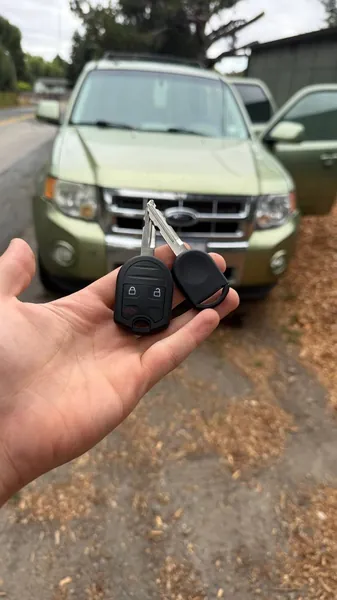
A chip hidden in the plastic head talks to the car immobilizer. The blade still turns the lock, but the engine only cranks when the chip code matches. This is the trap behind cheap copies: a blade cut at a kiosk opens the door and never starts the car.
- Years
- Roughly 1995 to the late 2010s
- How to tell
- A metal blade with a plastic head, no buttons. The car will not start with a hardware-store copy that skips the chip.
- Typical cost
- $80 to $180 to copy, $120 to $250 from scratch
- Locksmith can make it
- Yes, cloned or programmed on site for most makes
Remote head key
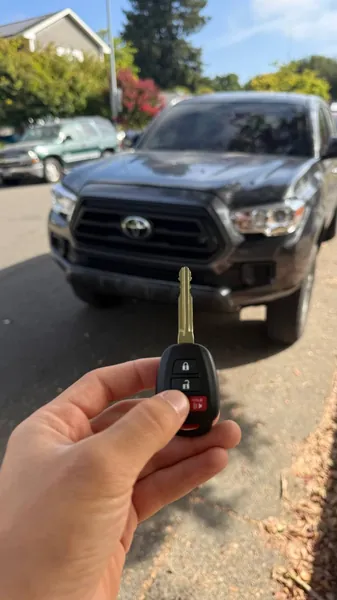
The remote and the chip key are fused into a single unit. You press the buttons to lock the doors and slide the same blade into the ignition. Because the remote and key are one part, replacing it costs more than a plain chip key.
- Years
- Roughly 2000 to the late 2010s
- How to tell
- One piece: a cut blade plus lock and unlock buttons built into the head.
- Typical cost
- $120 to $300 cut and programmed
- Locksmith can make it
- Yes, for most makes
Flip key
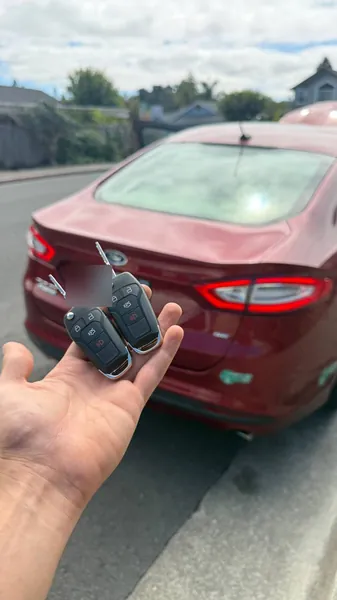
Same electronics as a remote head key, packaged so the blade tucks away when not in use. Popular on a lot of European and later domestic models. The folding hinge is the giveaway.
- Years
- Common from the mid-2000s on
- How to tell
- The metal blade folds out of the fob like a switchblade at the press of a button.
- Typical cost
- $120 to $300 cut and programmed
- Locksmith can make it
- Yes, for most makes
Proximity smart key (push-to-start)
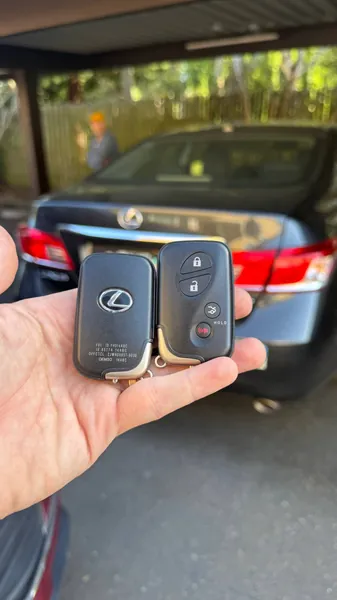
The fob and the car talk over a short-range radio link, so the key never leaves your bag. Most hide a small emergency blade inside for the door if the battery dies. This is the priciest type to replace because the fob hardware itself costs real money.
- Years
- Luxury from the late 2000s, mainstream from the mid-2010s
- How to tell
- No blade goes into the ignition. You keep the fob in a pocket, the door senses it, and you press a Start button.
- Typical cost
- $200 to $450 or more
- Locksmith can make it
- Yes for most models, a few high-security ones still need the dealer
Second Car Key, Same Visit
The tech is already at your car, so a spare cut on the spot runs half price.
Code KEY50, mention it on the call
One coupon per job, offers don't stack. Mention the code on the phone and the dispatcher applies it to your flat quote.
Which key by era
A rough timeline. Trims and regions vary, so treat the year ranges as a guide rather than a hard line.
| Era | Typical key type |
|---|---|
| Before ~1995 | Basic mechanical key |
| ~1995 to 2007 | Transponder chip key, some remote head keys |
| ~2007 to 2015 | Remote head and flip keys, proximity arriving on upper trims |
| ~2015 to today | Proximity push-to-start common, flip and transponder on base trims |
How to identify your key in 10 seconds
Start the dash. If there is a Start button and no slot for a blade, you have a proximity smart key. If you slide a blade into the ignition, look at the key itself: buttons on it means a remote head or a flip key, and the flip key folds. No buttons and a plastic head is almost always a transponder. A plain all-metal key on a car older than the mid-1990s is the basic mechanical type. Still not sure? Call with the year, make, and model and we will name it on the spot.
Typical key types by manufacturer
General patterns by brand. The exact key depends on the year, model, and trim, so use the brand link for model pages or call with your details.
| Make | Typical key types |
|---|---|
| Toyota | Transponder keys into the early 2010s, then Smart Key push-to-start spread across the lineup and is standard on most cars now. Tacoma, Tundra, and 4Runner held onto bladed keys longer. |
| Ford | PATS transponder keys from the late 1990s, with flip keys through the 2010s. Intelligent Access push-to-start shows up on higher trims, so an F-150 or Explorer can be either depending on year and trim. |
| Honda | Bladed transponder and remote keys through the early 2010s. Smart Entry push-to-start landed on Accord and Civic upper trims around mid-decade and is widespread today. |
| Chevrolet | Transponder and remote flip keys are the norm through the 2010s. Push-to-start arrives on many cars around 2014, while Silverado and the big trucks often stay on a flip key. |
| Nissan | An early mover on proximity. The Intelligent Key reached a lot of models by the late 2000s, though base Sentra and Versa trims kept a remote or transponder key longer. |
| Jeep | Wrangler stayed on a traditional bladed key well into the 2010s and got proximity only with the JL generation. Grand Cherokee moved to a push-to-start fob much earlier. |
| Dodge | The insert-style fobik key ran through the 2000s and 2010s. Charger and Challenger moved to proximity push-to-start, so the fob you carry depends on the model and year. |
| Hyundai | Mid-2010s is the turning point. Proximity smart keys arrive on top trims first, then spread across the range, while base models often kept a folding key a while longer. |
| Kia | Tracks closely with Hyundai. Smart key push-to-start spread from the mid-2010s on higher trims, with flip keys hanging on at the entry level. |
| Lexus | One of the earliest on Smart Access. Many models ran proximity keys from the mid-2000s, and most of the current lineup is push-to-start only. |
| Subaru | Bladed transponder keys for years, then Keyless Access push-to-start arrived around 2015 on higher trims. Base Impreza and Crosstrek trims kept a regular key longer. |
| Acura | Keyless proximity entry from the late 2000s on most models. Nearly everything recent is push-to-start, with no blade going into a slot. |
| Infiniti | Intelligent Key proximity fobs from the mid-2000s across most of the lineup. Current models are push-to-start, with a hidden emergency blade for the door. |
| Mazda | Mazda ran transponder keys through the early 2010s, then added Advanced Keyless push-to-start on higher trims around 2014. The blade usually hides inside the fob. |
| Chrysler | The fobik insert key defined the 2000s and 2010s. The 300 and Pacifica use proximity push-to-start, so check whether yours slots in or stays in your pocket. |
| Volvo | Proximity keyless from the late 2000s on most models. Recent Volvos are push-to-start, and the slim fob hides a small emergency key. |
| Alfa Romeo | The modern Giulia and Stelvio use proximity push-to-start fobs. Expect a smart key rather than a bladed one on anything recent. |
| Cadillac | Keyless proximity from the late 2000s across most models. Current Cadillacs are push-to-start, with an emergency blade tucked in the fob. |
| GMC | Same GM systems as Chevy. Flip keys are common, with push-to-start on Sierra and Acadia upper trims, so the year and trim decide it. |
| Buick | GM remote and flip keys, with push-to-start on most models from the mid-2010s. Encore, Enclave, and Envision trims vary by year. |
| Mini | BMW-based electronics. Comfort Access proximity fobs appear on many MINIs, while older ones used a chunky transponder fob with a hidden blade. |
Need the exact key for your car? See the car key replacement page, or call (469) 712-5422 with your year, make, and model for a flat quote.
Know your key type now? Call with the year, make and model for a flat quote.
Car key type FAQ
How do I know which car key type I have?
Look at the key in your hand. No buttons and a plain metal head means a basic or transponder key. Buttons built into a key with a blade is a remote head or flip key. No blade in the ignition and a Start button on the dash means a proximity smart key. If you are unsure, tell us the year, make, and model and we will confirm it in seconds.
Can a locksmith make any of these keys, or do I need the dealer?
A mobile locksmith makes the large majority of keys, from basic blades to proximity smart fobs, right where your car is parked. A small number of high-security vehicles still need the dealer, and an honest shop tells you up front if yours is one of them.
Why is a smart key so much more expensive than a regular key?
The fob hardware costs more than a simple chip key, and some brands take longer to program. A basic transponder copy can be under $180, while a push-to-start proximity fob often runs $200 to $450 or more depending on the make.
Will a hardware-store copy start my car?
Only if you have an old non-chip mechanical key. Anything from the mid-1990s on uses a chip, so a copy that skips the chip will turn the lock but never crank the engine. Chip keys need a locksmith or the dealer.
I lost my only key. Is that more expensive than a copy?
Yes. With a working key the locksmith can clone the code, which is quick. With no key at all, a new one has to be cut from scratch and the car taught to trust it, which is skilled work and costs more. Making a spare while you still have a working key is the cheap insurance.