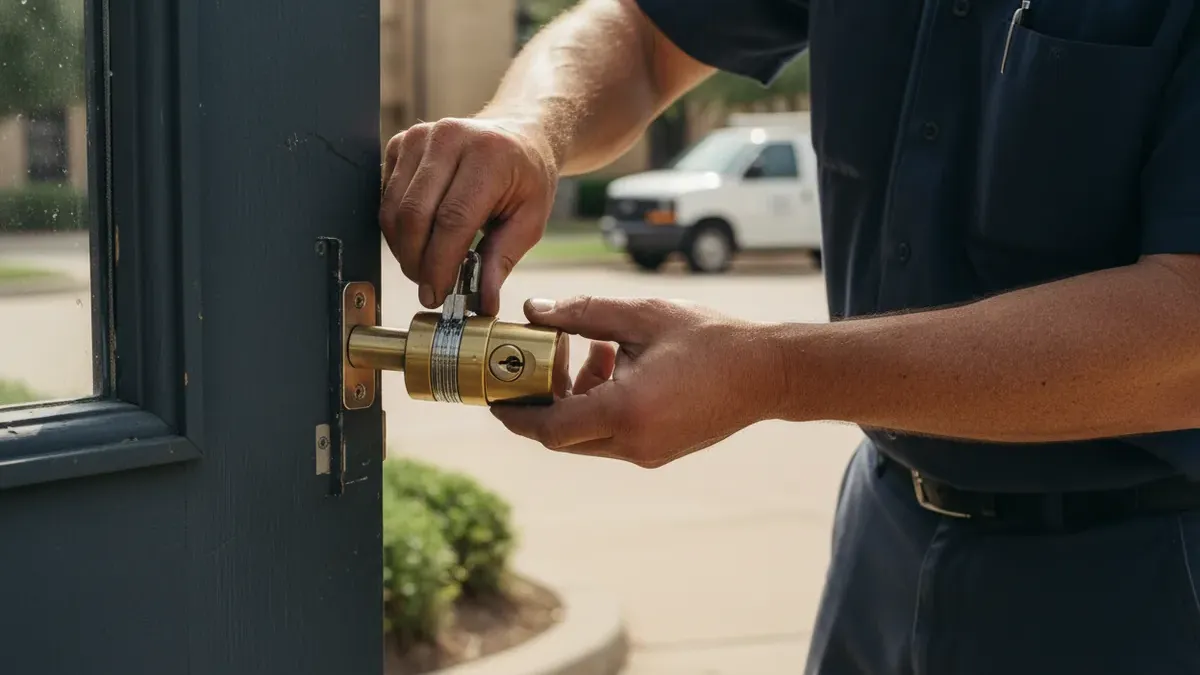
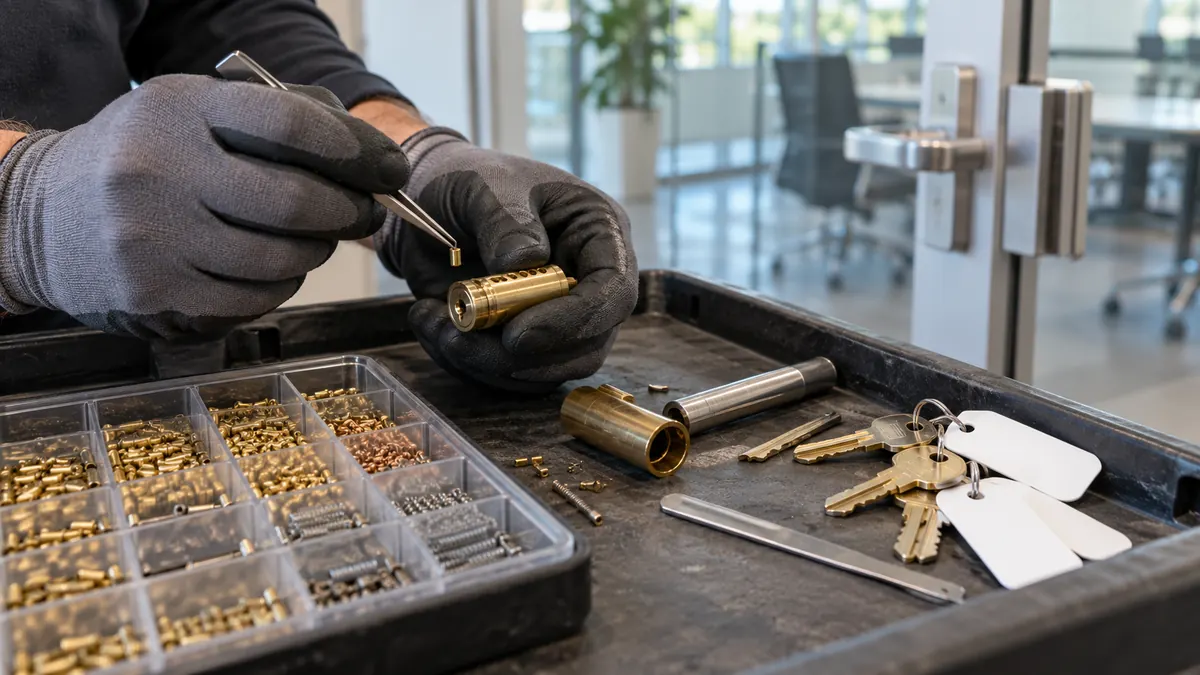
A business should rekey its locks any time it loses track of who holds a working key: an employee or manager leaves, a key ring goes missing, a tenant moves out, a new lease starts, or someone breaks in. Commercial rekeying resets the pins inside each cylinder so every old key stops working, and the door hardware stays right where it is.
On commercial doors that usually means mortise cylinders, rim cylinders on exit devices, or interchangeable cores. The job goes a lot faster when someone has an accurate list of doors and keys before the locksmith arrives. Apex Locksmith Pros rekeys offices, storefronts and small warehouses in McKinney and nearby cities, including suites along the US-75 corridor and shops in Historic Downtown McKinney. Below is when to rekey, how each hardware type is handled, how to plan the visit and how the price comes together.
Need it handled today? Commercial Lock Rekeying from a licensed mobile locksmith in McKinney and nearby cities.
In this guide (6 sections)
When should a business rekey its locks?
Rekeying follows events, not the calendar. These are the ones that should put it on the schedule:
- An employee or manager leaves. Even when they go on good terms, you can't confirm every copy came back. A departing manager matters most, since a manager's key usually opens more doors.
- A key ring is lost or stolen. If the ring had the company name or address on it, treat it as urgent.
- A tenant moves out, or you move into a space someone else had. The prior tenant, the cleaning crew they hired and their contractors may all still have keys.
- A new lease starts. Plenty of landlords rekey between tenants. Not all of them do, and the lease decides who arranges it.
- After a break-in. Even if the door was forced, keys may have walked out of a desk drawer or a lockbox while they were inside.
Then there's the trigger nobody writes down, which is simply not knowing. If no one can say how many keys exist to the back door, you've already lost the count. A rekey puts it back to zero so you can start a clean record.
How commercial rekeying works on mortise, rim and IC hardware
Commercial doors use different cylinders than a house does, and each type comes apart a little differently.
Mortise cylinders thread into a lock body set inside the edge of the door. You see them on storefront glass doors and office suite entries. The locksmith loosens the set screw, takes the cylinder out, repins it to the new key and threads it back in. The mortise lock body itself stays put.
Rim cylinders sit on the outside of doors with a panic bar or exit device, usually rear and side exits. The cylinder comes off from the inside, gets repinned and goes back on. The exit device works exactly as it did before.
Interchangeable cores, or IC cores, are built to be swapped. A special control key pulls the core out of its housing in seconds, and a pre-pinned replacement core drops in. That makes future rekeys quick, which is why multi-tenant buildings and businesses with a lot of turnover like them.
Knob and lever locks on interior offices and storerooms rekey much like residential cylinders. Whatever the type, an old key is dead the moment its cylinder is repinned, and the new keys get tested in every door before the job is closed out.
Keyed alike or master keyed: choose before the rekey
Every cylinder is coming apart anyway, so a rekey is the cheapest time to change how your keys are organized.
Keyed alike means every lock in the group takes the same key. That fits a small storefront with a front door, a back door and an office, where everyone on staff is trusted with every door. It's simple. The catch is that you can't limit a key to certain rooms.
Master keyed means each door, or group of doors, has its own change key, and one master key opens all of them. The front desk employee can get into the lobby and the supply room but not the records room or the manager's office. When that person leaves, only the cylinders their key opened need repinning.
If you have more than a handful of doors and more than a few people holding keys, master keying is usually worth planning now instead of bolting it on later. Our guide to master key systems for business explains the levels and how a system gets designed. Short version: settle the structure first and let the rekey follow the plan.
Rekeying a business? Call with your door and key count and hear the total on the phone.
Plan the rekey with a key schedule
A key schedule is a written record of which key opens which door and who holds each key. Businesses that keep one rekey faster. They also rekey less, because when a key goes missing they know exactly which cylinders it could open.
Putting one together before the visit isn't hard:
- Walk the space and number every keyed door. Include closets, the electrical room and any roll-up or dock door with a keyed cylinder.
- Note the hardware on each one: mortise, rim on an exit device, IC core, or knob and lever.
- List the roles that need access, not people's names, so the schedule still holds up after turnover.
- Decide which doors share a key and which stay separate.
- Pick one person to issue keys and have them keep a sign-out log with key numbers.
Give that list to the locksmith and the visit is spent doing the work instead of figuring out the building. Keep the finished schedule somewhere private. It is, in effect, a map of how to get into your business. For a professional office along the US-75 corridor with a dozen interior doors, that hour of prep can save a return trip.
Scheduling a commercial rekey within business hours
Rekeying is planned work, and most businesses want it done without getting in customers' way. Apex Locksmith Pros works daily from 8 AM to 8 PM, weekends included, so the visit is booked inside those hours. We don't offer overnight service.
That still leaves a lot of room. A retail shop in Historic Downtown McKinney might take the first slot at 8 AM, before it opens. Offices often go for late afternoon, once most of the staff has left, or a Saturday or Sunday when the building is quiet. Restaurants tend to pick the gap between lunch and dinner.
A few things keep the visit short. Have someone on site who can unlock every door on the list. Clear the way to exit devices and storefront doors, and tell staff ahead of time that their current keys stop working that day. Collect the old keys at the end anyway. They won't open anything, but you don't want anyone walking around with a key that looks like it still works.
If it's urgent, say a manager was let go and kept a key, tell us on the call so the visit goes into the earliest slot the schedule allows.
Is it cheaper to rekey or replace commercial locks?
Rekeying is usually cheaper, because the commercial hardware is the expensive part and a rekey keeps it on the door. A good mortise lock or exit device lasts for years. If it latches cleanly and the only problem is who has keys, repinning the cylinder is the obvious fix.
Replacement is the better call in a few situations. A lock that sticks, won't latch or got damaged in a break-in should be replaced, not rekeyed. Moving to a restricted keyway, so staff can't copy keys at a hardware store, means new cylinders by definition. And in a building with a patchwork of brands, moving some cylinders onto one keyway can make the system cheaper to maintain.
Commercial rekeying has no published starting price. The total depends on how many cylinders there are, what types they are and whether master keying is part of the job. We count the cylinders and door types with you on the call and quote a flat total before dispatch. There's no call-out fee. If someone is locked out of the building, commercial lockout service starts from $145+.
Rekeying a business? Call with your door and key count and hear the total on the phone.
Key takeaways
- Rekey business locks after anything that leaves keys unaccounted for, such as a departure, a lost key ring, tenant turnover, a new lease or a break-in.
- A rekey repins the existing cylinders so the old keys stop working. Mortise locks, exit devices and the rest of the hardware stay on the door.
- Interchangeable cores can be swapped in seconds with a control key, so future rekeys go faster in businesses with frequent turnover.
- A written key schedule of doors, hardware types and roles makes the rekey a quick job and limits later rekeys to the doors affected.
- Commercial rekeying is quoted as a flat total on the call once the cylinders and door types are counted. There is no call-out fee.